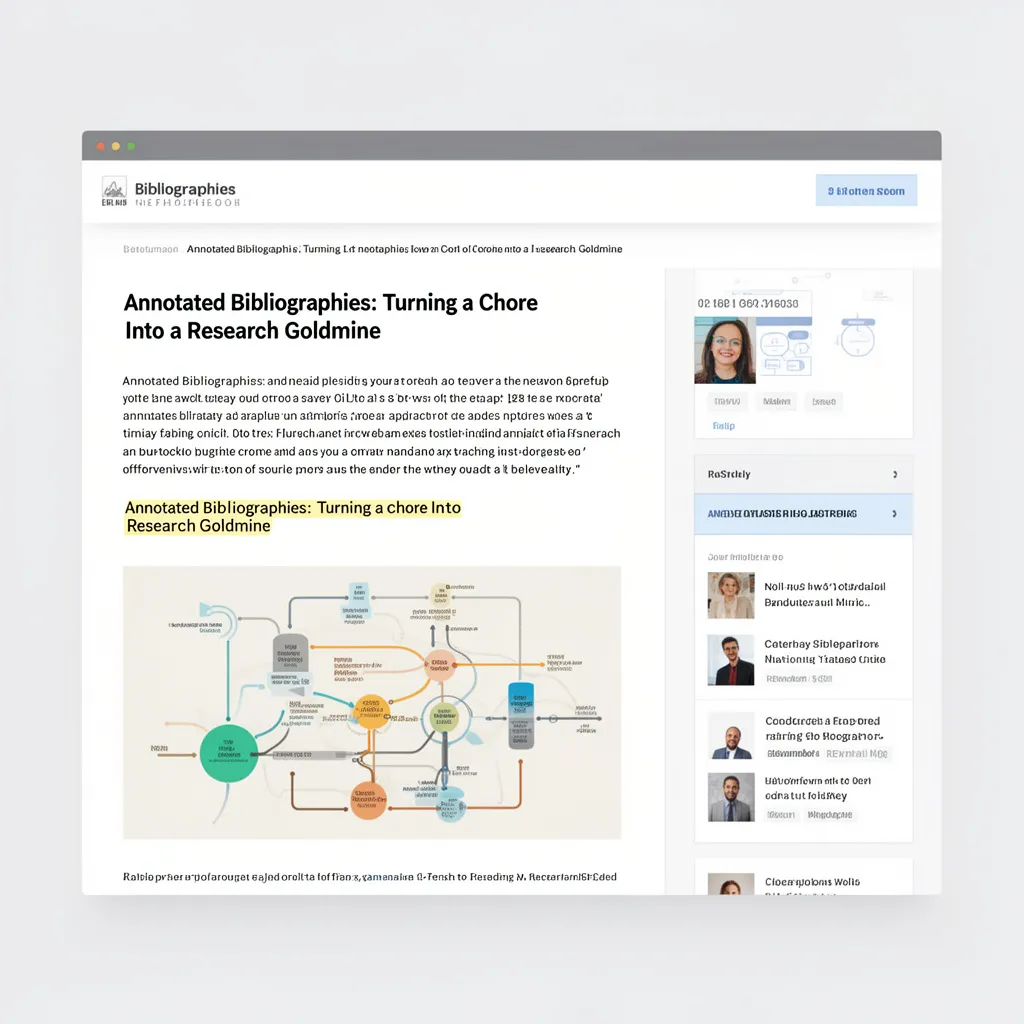
Annotated Bibliographies: Turning a Chore Into a Research Goldmine
An annotated bibliography does more than list sources. It forces you to record what each source actually says and how you plan to use it, which cuts down on rereading later when you draft.
Start with the sources you already pulled for your current project. Pick five to start. The goal is a short note for each that you can scan in under two minutes next week.
Build the list in four passes
- Write the full citation in the style your field uses.
- Summarize the main claim in one sentence using the author’s own terms.
- Note the method or evidence type in a second sentence.
- Add one line on how this piece connects to your question or to another source you have.
Keep each annotation under 120 words. Longer notes become hard to scan.
| Element | Example (remote-work study) |
|---|---|
| Citation | Smith, J. (2022). Remote teams and output. Journal of Work Research, 14(3), 45-67. |
| Summary | Smith tracked 180 employees across six companies and found that output stayed flat when meetings dropped below four per week. |
| Method | Used weekly self-reports and server log data over three months. |
| Use note | I can cite this to counter the claim that all remote work lowers productivity; it also pairs with the 2023 Lee study on meeting load. |
Review your finished list with this quick check:
- Can I find the right source without rereading the full text?
- Does each note show a clear link to my research question?
- Are the connections between sources visible?
When you hit that point the bibliography stops feeling like extra work and starts acting as your working outline.