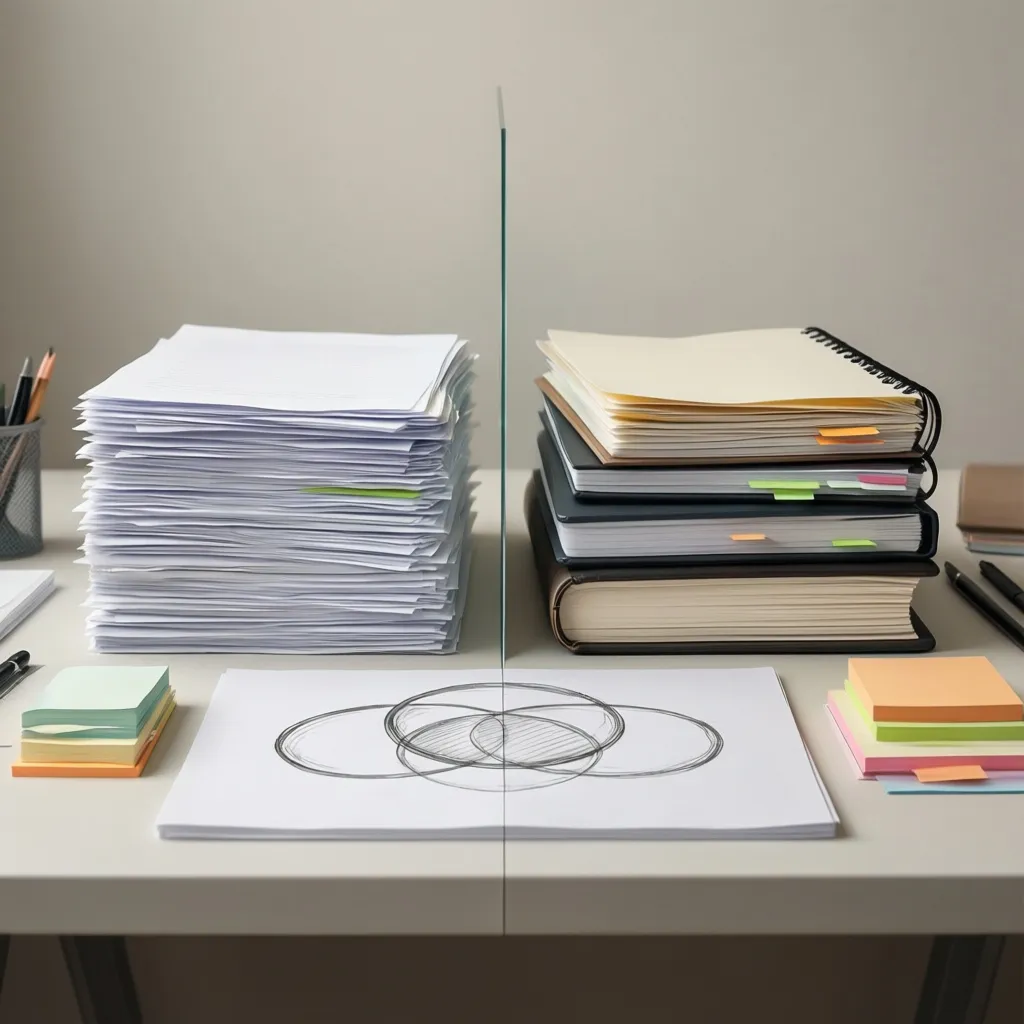
How to Structure a Compare-and-Contrast Essay Beyond the Basics

How to Structure a Compare-and-Contrast Essay Beyond the Basics

Start with your thesis that names the two subjects and states the single key insight you want readers to take away. Then decide between block or point-by-point order based on how much overlap your points have. Most writers get better results when they mix both: open with a short block paragraph on each subject, then switch to point-by-point for the rest of the body.

Build the Body with Clear Moves

Follow these four steps to keep the essay focused and easy to follow.

  1. Write one paragraph that sets the scene for subject A only. Keep it to three or four sentences so it does not drift into comparison yet.
  2. Write the matching paragraph for subject B. Use the same order of details you chose for A so readers can track the contrast without extra work.
  3. Switch to point-by-point paragraphs. Each new paragraph now handles one shared category: cost, time demands, social effects, or whatever fits your thesis.
  4. End every point-by-point paragraph with a one-sentence bridge that reminds readers of your main insight before you move to the next category.

Here is how the pattern looks in practice for an essay on remote work versus office work.

Paragraph focus Content example
Scene for remote Employees set their own hours and avoid a commute.
Scene for office Teams meet face-to-face at fixed times and share the same space.
Point 1: collaboration Remote teams rely on scheduled video calls while office teams solve problems in the moment during hallway talks.
Point 2: focus time Remote workers gain long stretches without interruption, yet office workers often lose that same stretch to drop-in requests.

Check your draft against this short list before you stop revising.

  • Thesis still matches the order you used in the body
  • Each point-by-point paragraph names both subjects in the first sentence
  • Transitions repeat one key word from the thesis instead of generic phrases like “on the other hand”
  • Final body paragraph returns to the insight you stated at the start

Beating the Blank Page: Pre-Writing Rituals That Spark Real Ideas

Beating the Blank Page: Pre-Writing Rituals That Spark Real Ideas

You open the doc and nothing comes. These three pre-writing rituals get most writers past that first empty stretch in under fifteen minutes.

Move before you type

Five to ten minutes of walking or stretching shifts your brain out of the staring loop. Do it without your phone.

  1. Stand up and leave the desk.
  2. Walk around the block or pace the hallway.
  3. Notice three specific things you see or hear.
  4. Return and open the document again.

Most people find the first workable sentence arrives during the walk back.

Touch one familiar object

Pick one item that already lives on your desk and give it your full attention for thirty seconds. A mug, a stone, or even the edge of the laptop works.

Object What you notice How it helps
Coffee mug Warmth and handle texture Pulls you into the present moment
Small stone Weight and cool surface Creates a quick sensory reset
Pen Click or grip Signals that writing is next

Record one spoken sentence

Open your phone’s voice memo app and say the first thought that arrives, no matter how rough. Play it back once.

  • “This piece needs to explain why the old process stopped working.”
  • “I’m stuck because I don’t know who the reader is yet.”
  • “The client wants data but stories will land better.”

Transcribe that sentence into the document. It becomes the first line you edit instead of the first line you invent.

Smart Source Evaluation: How to Spot CRAAP and Avoid Bad Citations

Smart Source Evaluation: How to Spot CRAAP and Avoid Bad Citations

You open a search result and need to decide fast whether it belongs in your project. Run the CRAAP test on every source before you pull a quote or add it to your reference list.

Run the CRAAP Test in Five Steps

  1. Currency: Check the publication or update date. A 2014 article on TikTok algorithms fails here when your paper covers 2023 platform changes.
  2. Relevance: Read the abstract or first two paragraphs. Does the main claim actually match your research angle, or did the title pull you in under false pretenses?
  3. Authority: Look for the author’s name, credentials, and affiliation. A Medium post by an unnamed “researcher” carries less weight than a paper from a named professor at a known university.
  4. Accuracy: Scan for citations or data sources inside the piece. If claims sit without links or references, open a second tab and verify one key fact.
  5. Purpose: Ask why the page exists. A .com site selling supplements that also posts “studies” on vitamins usually has a sales goal first.

Check Citations with a Quick Table

Source type Red flag Next move
Blog post No date or author Search the claim on Google Scholar
News article Only one anonymous source Find the original study it cites
Website Statistics without links Trace the number to its origin report

Keep a short checklist on your screen while you draft: date present, author named, main claim supported, and purpose matches my needs. When any box stays empty, skip the citation and move to the next result.

All-Nighters vs. Sleep: What the Science Says About Retention and Burnout

All-Nighters vs. Sleep: What the Science Says About Retention and Burnout

Sleep wins for retention. An all-nighter can get the work done tonight, yet you will remember less tomorrow and feel drained for days. The difference shows up fast in real study sessions.

How Sleep Helps Retention

Your brain sorts and stores new material during deep sleep. When you study for three hours then sleep six or seven, the details stick better than when you push through the night.

  • Names and formulas from an evening review session come back quicker after rest.
  • People who sleep after learning a new process solve related problems faster the next day.
  • Short naps of 90 minutes also move some information into longer-term memory.

What an All-Nighter Does to Retention

Staying awake 24 hours cuts your ability to recall facts and steps. The drop hits hardest on material you just covered.

Scenario Next-day result
Studied until 2 a.m., slept Remembered most key points on a quiz
Pulled all-nighter Missed details, mixed up order of steps

The pattern repeats in exam weeks. Students who skip sleep re-read the same notes multiple times because the first pass did not stick.

How Burnout Shows Up After All-Nighters

Burnout arrives when you repeat late nights over several days. Focus shrinks, small tasks feel heavy, and mood drops.

  • By day three you stare at the screen longer but finish less.
  • Simple decisions take extra time and you second-guess them.
  • Physical signs include headaches in the afternoon and trouble falling asleep even when you try.

Steps to Finish Work Without the Tradeoff

  1. Pick a hard stop time, such as midnight, and move the remaining tasks to the next morning.
  2. Break the session into 50-minute blocks with a 10-minute break; end the last block earlier than usual.
  3. Review the main points once right before bed instead of re-reading everything.
  4. Keep the room cool and phone away so sleep starts within 20 minutes of lying down.